by Jeremy Hunt
Daily Lobo
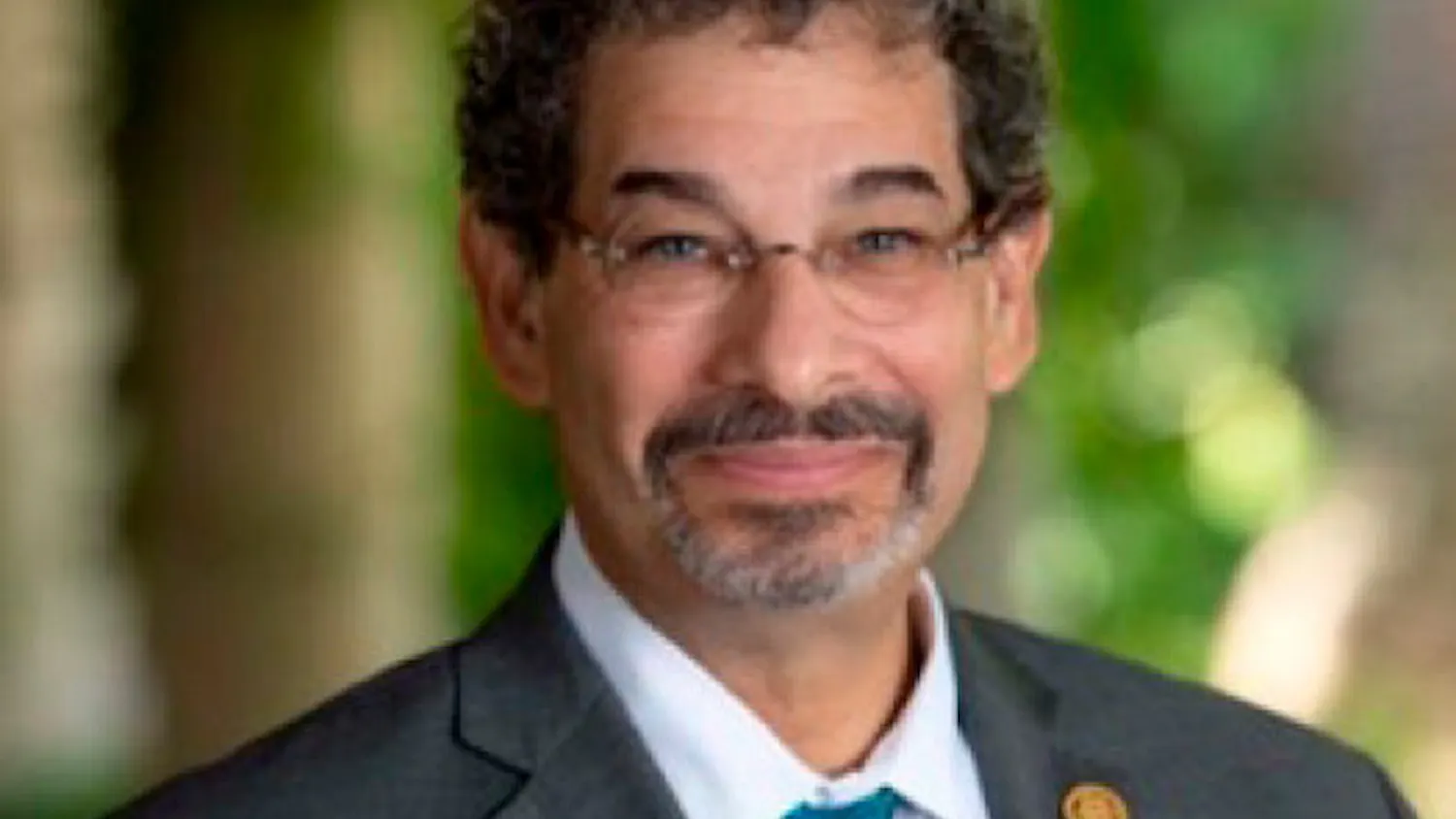
About 20 faculty members met Monday in the SUB with Patrick Maney, a candidate for dean of the College of Arts and Sciences.
He will meet with staff today from 11 to 11:45 a.m. in Ortega Hall 335 and with students from 1:45 to 2:45 p.m. in the SUB Lobo A and B.
He said he wants to work at UNM because of the campus's ethnic and age diversity.
Get content from The Daily Lobo delivered to your inbox
Maney is the chairman of the history department at the University of South Carolina.
He was an administrative assistant in the Wisconsin Senate minority leader's office from 1977 to 1980.
He left his job in politics to be an assistant history professor at Tulane University in New Orleans in 1980.
He became a professor in 1994 and taught there until 1998.
He was hired as chairman of the history department at the University of South Carolina in 1998.
Maney is a historian of modern American political history.
The Daily Lobo sat down with Maney to ask him questions about his experience and plans if chosen for the position.
Daily Lobo: What experience do you have that prepares you to run a college as large and diverse as the College of Arts and Sciences?
Patrick Maney: I think both the experience I had in state government, for one thing, and dealing with government at the highest levels. I was the top aide to a senior state senator, and it's an experience, an administrative experience, that most academics have not had - dealing with a pretty diverse group of people with both constituents and persons in the Legislature and with various interest groups. So, that's something - an experience I've had that others haven't. And I think over the years, just teaching in a variety of situations at Tulane and then at South Carolina have given me experience with very big and very different kinds of institutions. One of the things I did at South Carolina, I was, a couple of years ago, co-chair of a committee that studied and then recommended and helped engineer the merger of two of the largest colleges on campus, liberal arts and the college of math and science.
DL: What's the biggest challenge facing the College of Arts and Sciences?
PM: It's both a challenge and an opportunity of continuing to be a vehicle of opportunity for people from all sorts of backgrounds - diverse backgrounds. That is its mission, and that's the great opportunity. This is a difficult time, nationally, for higher education. There's a real division between those who have access to higher education and those that don't, and I think that this University - this college and this University as a whole - really has a special mission to continue to provide opportunity to people from all sorts of diverse backgrounds.
But how to do that, how to do it well, with scarce resources - that's a challenge. But it's a challenge that simply has to be met, because we as a nation would be the worse for it. Public education has made us what we are, and I think this is a real turning point in public education. I'm thinking one of the things that is attractive about this institution is I think it is sort of positioned maybe to become a model for how you take people from all sorts of backgrounds and with different levels of preparation and show that it can be done that a public institution can still be a place of opportunity.
DL: What will you do to integrate the departments and promote interdisciplinary study?
PM: I think it's critical. I would do a lot of the things I have done in the (history) department at South Carolina. A lot of our hires increasingly are connected with other disciplines and other departments and other programs.
You just provide positions that are interdisciplinary. You just need to target resources to do that. If you believe that interdisciplinary work is critical, then that's where you have to put - it can't just be talk -- that's where you have to put resources. Not only here, but around the country, the big barriers, fortunately, are being broken down. As I said, this experience I had as co-chair of this merger committee, that's what we were trying to do is break the barriers between the liberal arts on one hand and math and science on the other. I think we were denying our students sort of a broad experience that they might otherwise have had.
DL: How will you ensure the success and satisfaction of faculty, staff and students under your leadership?
PM: To be a real spokesperson for them. My role now in South Carolina is to be a strong, effective spokesperson for my colleagues in the history department, and that would not at all change if I were dean. That's my role - to represent their interests, to explain why, what they're doing, why it's important, why it's worth other people's support in the administration and within the community. To consult people and the vision for this place and plan of action already resides here in the ideas that are already here. The next dean's task is going to be able not to impose a vision from outside but be able to utilize what's already here by talking to faculty and consulting with them.
DL: What will you do to improve graduation and retention rates?
PM: That's certainly one of the critical challenges, and I think that first year or so is critical to make that transition from high school to college, to provide a nurturing and supportive environment. I think that's critical so you don't lose people right off the bat. I also think increasingly you need to go, "I like what some people are doing in terms of partnering with high schools and even elementary schools in math, science and language to make sure that when kids get here to college that they're better prepared to succeed." You need to do a lot more here at the University, but I also think that this University, and others, as well, need to extend beyond the University and to be partnering with schools - public schools and others - long before kids get to college.
DL: How will you balance the needs of undergraduate students with the needs of graduate students?
PM: I think they're really totally compatible. The success of both is critical to a successful university. So, I don't think - I don't see that there is a conflict. No public university is going to get ahead without really being supportive of both the undergraduate and the graduate. Having said that, the undergraduate experience is still the heart. That is the core of our mission at any place. That really has to be your self-definition.