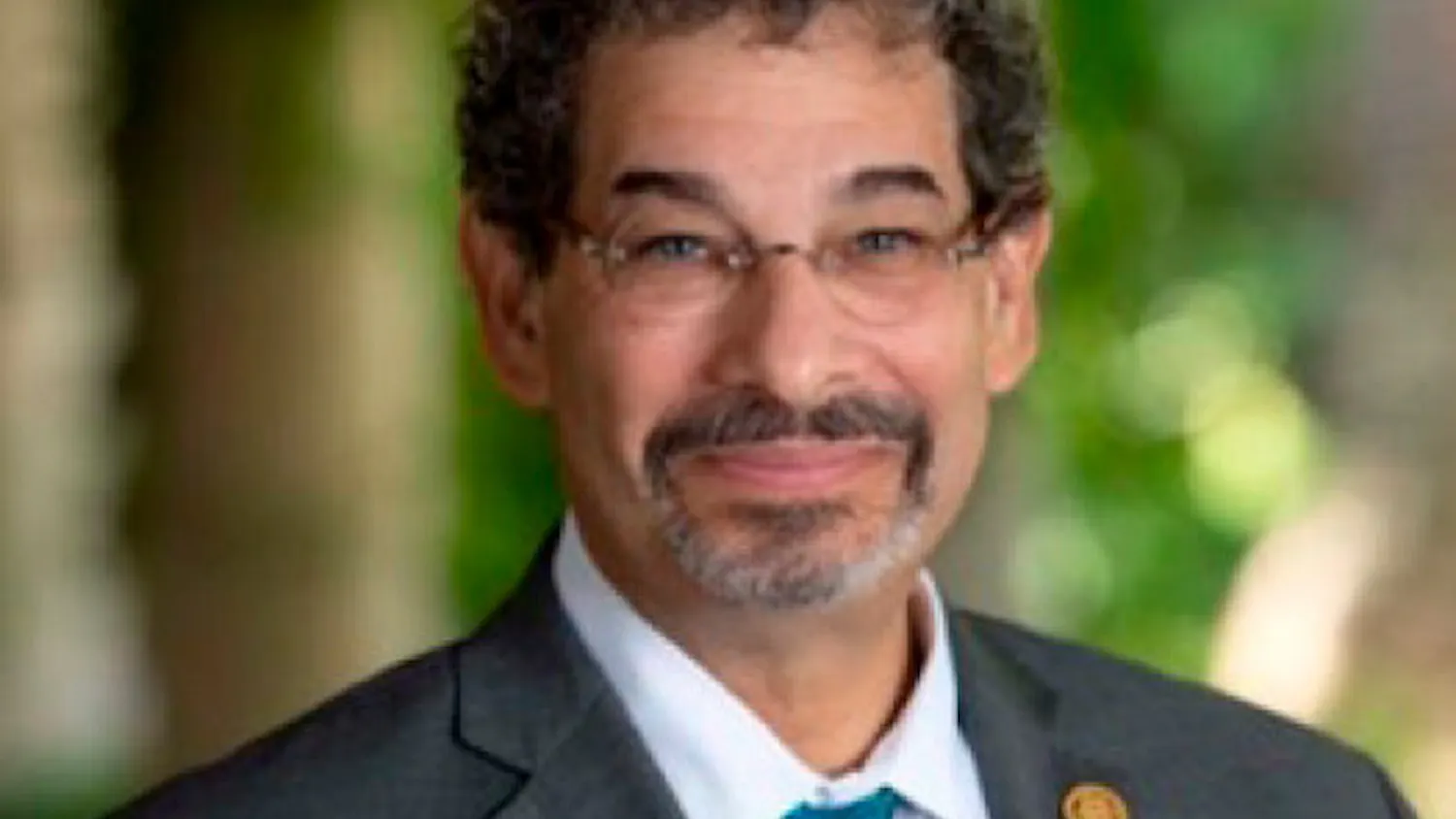
Kent Kiehl grew up on the same street as convicted serial killer Ted Bundy, which sparked his interest in serial killers and psychopaths.
“I always wondered why someone could do something like that,” Kiehl said. “When I started to study serial killers, psychopaths, individuals who commit those kinds of crimes, I decided to make a career out of trying to develop ways of preventing those things from happening.”
Kiehl is a professor of psychology and neuroscience at the University, and works at the nonprofit Mind Research Network.
Kiehl recently co-authored and published the article “Neuroprediction of future rearrest” in the Proceedings of the National Academy of Sciences’ online publication. By analyzing brain activity, he’s investigating the possibility of whether one can predict the possibility of convicted felons becoming repeat offenders. The study continues to develop, but what he published shows it is possible to predict this, Kiehl said.
The study focuses on activity in the anterior cingulate cortex (ACC), a part of the brain that regulates decision-making skills and impulse control. Whereas traditional impulsivity tests measure brain activity based on observable changes in outward behavior and their relation to theory, Kiehl’s study uses an advanced MRI to scan brain activity directly.
“Other measures are trying to understand what’s happening inside your brain, but if you’re directly measuring what’s happening inside their head, you potentially have a better chance of understanding what systems are conveying risks for reoffending,” he said.
The study consisted of a sample of 96 male convicted felons. Each participated in tasks that measured impulsivity while an MRI scanner tracked their brain activity. After each subject was released from prison in 2007, researchers tracked police records for four years, looking for subjects that would become repeat offenders. The results of the study indicate that subjects with lower ACC activity indicated a higher rate of rearrest.
Since the study was published, the Huffington Post and NPR wrote stories about Kiehl and his work.
“Most people have been very interested — being able to predict who reoffends or who doesn’t, who to give bail, or who to send to prison or who not to, it’s one of the most important things that our criminal justice system does and so the more accurately we can help those decision makers make good decisions, the better it is for everyone,” he said.
Kiehl said he hopes his work can one day help predict and prevent future incidents of crime.
“My laboratory uses a one-of-a-kind MRI system, to try to study prisoners who’ve done these type of things, the ones that are the most difficult to work with, and the goal is to try to develop better treatments for them,” he said. “We can hopefully prevent them with treatment that could start when they’re kids or teenagers to try to steer them off this trajectory of criminal behavior.”
Get content from The Daily Lobo delivered to your inbox