

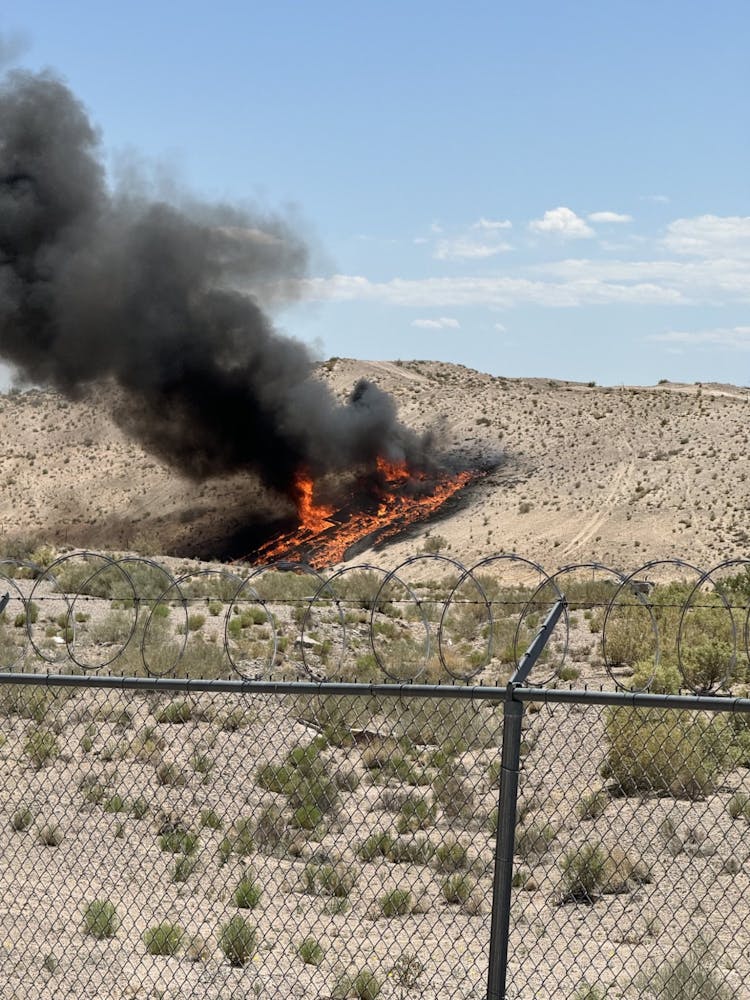
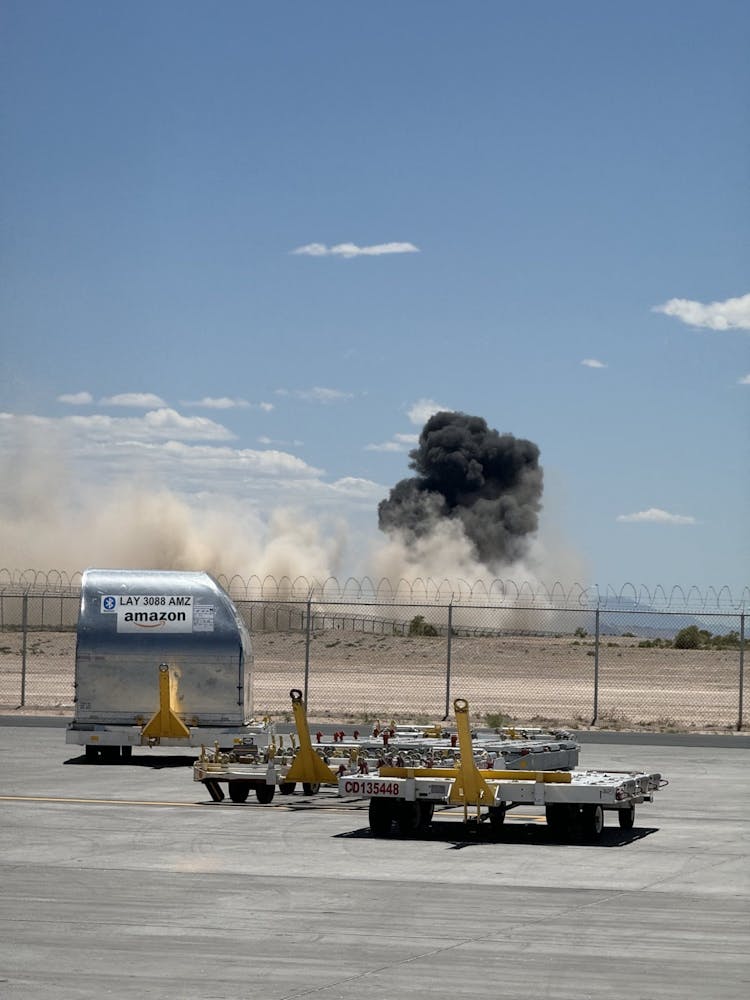
An F-35 Lightning II fighter jet crashed near the Albuquerque Sunport shortly after takeoff on May 28. The aircraft’s pilot ejected from the jet shortly before its crash and sustained serious injuries, but was hospitalized and is in stable condition, according to Aerotime Hub.
The aircraft was on the way to Edwards Air Force Base located in Southern California, according to CBS News.
A supervisor of air operations for a cargo handler at the Sunport, who spoke on the condition of anonymity, witnessed the crash.
“We initially heard it before we saw it. Once we heard it, we moved towards the end of what we call a ramp … We were the first ones to see it happen,” he said.
Before the crash, the supervisor was completing paperwork. After hearing the F-35’s departing engines power up, he walked to a ramp to view the aircraft’s takeoff.
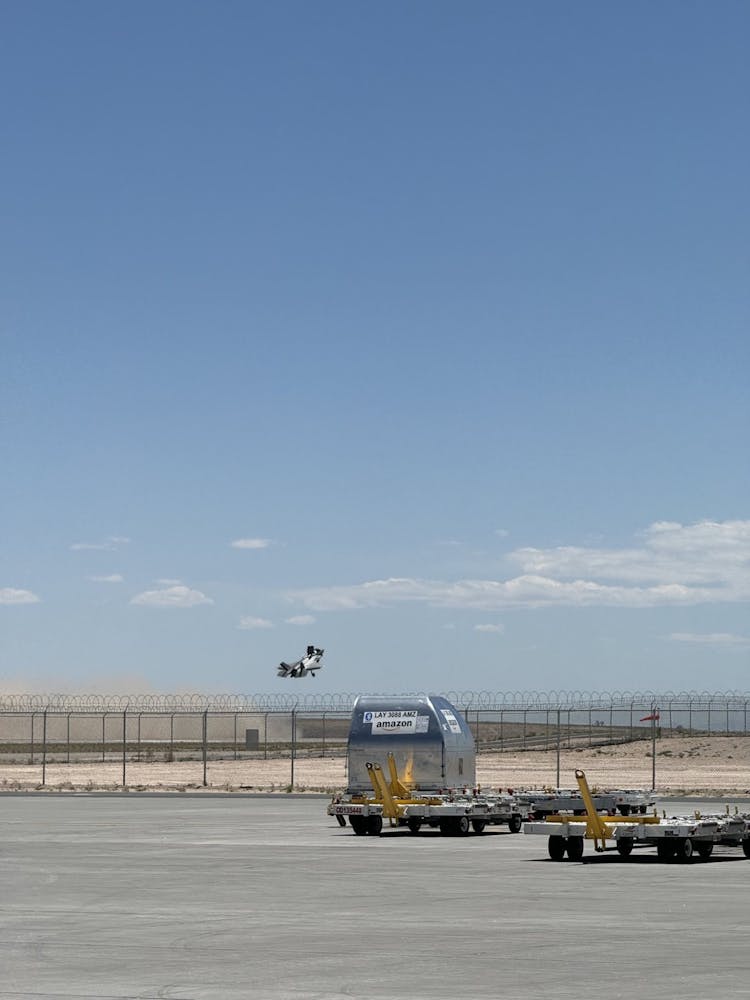
“He was maintaining level above the runway. And then all of a sudden, it seemed like he pulled the nose back for departure. He wasn't gaining any altitude by the time he approached us. I started taking pictures and recording when he wasn't gaining altitude, and we noticed he was actually losing altitude,” the supervisor said.
The supervisor, who flies planes outside of work, quickly noticed that the aircraft was too low to the ground, he said.
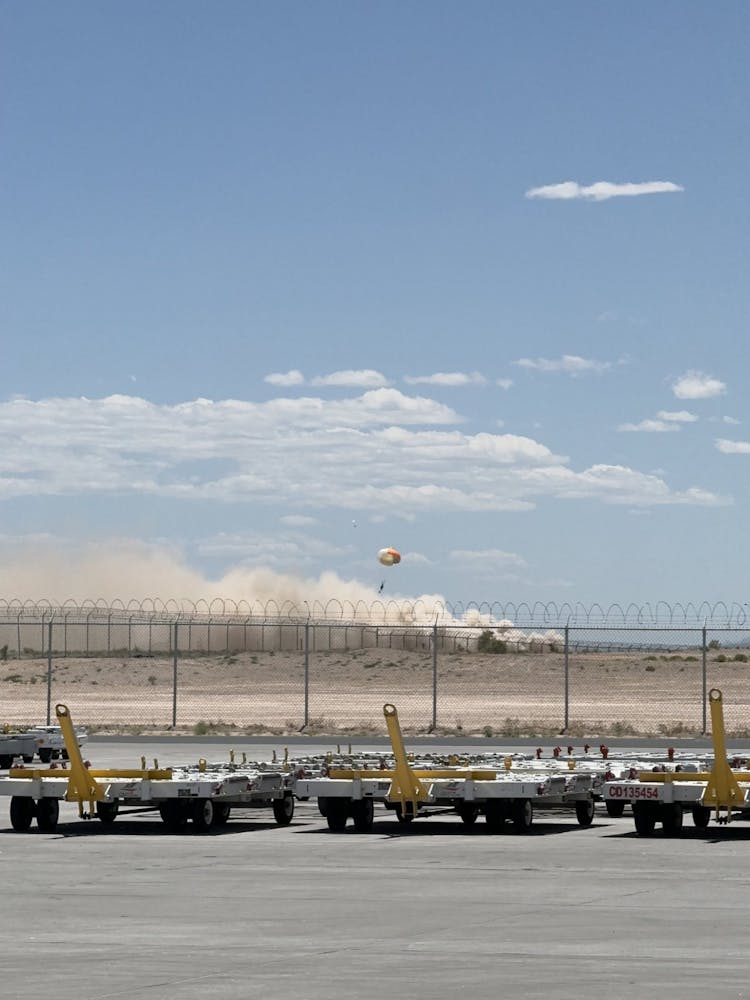
“The plane crashed and exploded. We remember hearing the ejection seat. The ejection seat had rockets in it, so we heard the sound of the rocket shooting, and we saw his parachute,” the supervisor said.
A common ejection seat for the F-35 Lightning II, the US16E, includes a parachute and a rocket system designed to reduce a pilot’s velocity toward the ground once they escape an aircraft, according to aircraft manufacturing company Martin-Baker. The ejection seat has saved eight lives since it was first implemented into F-35s, according to Martin-Baker.
The supervisor was on the last third of the runway, which allowed him and a colleague to quickly approach the crashed aircraft using an airplane tug — a vehicle designed to tow aircrafts. The crash site was about a mile away from where they were working, he said.
“We drove to where the aircraft crashed because we were the only ones that were at that end of the runway,” the supervisor said. “We figured we'd be there to let the first responders know that there was a pilot ejected and that he was almost certainly injured.”
The supervisor and his colleagues then encountered police – the earliest first responders to arrive at the scene, followed by the fire department. The first responders arrived within five minutes, the supervisor said.
Get content from The Daily Lobo delivered to your inbox
“We were able to warn the fire department that he ejected. They were able to grab the pilot and then put out the fire,” the supervisor said.
The pilot was transported to University of New Mexico Hospital, according to ABC News.
An investigation into why the aircraft crashed is underway, according to the U.S Naval Institute News.
“There's going to be a lot of speculation on what happened. Currently, there's a lot of talk about whether it was pilot negligence, an engine failure, a little bit of both, things like that,” the supervisor said. “It's important that people remain open-minded because aviation is a science at heart.”
Nate Bernard is a beat reporter with the Daily Lobo. He can be reached at news@dailylobo.com or on Twitter @DailyLobo
Nate Bernard is the managing editor for the Daily Lobo. He can be reached at news@dailylobo.com or on X @natebernard14


