

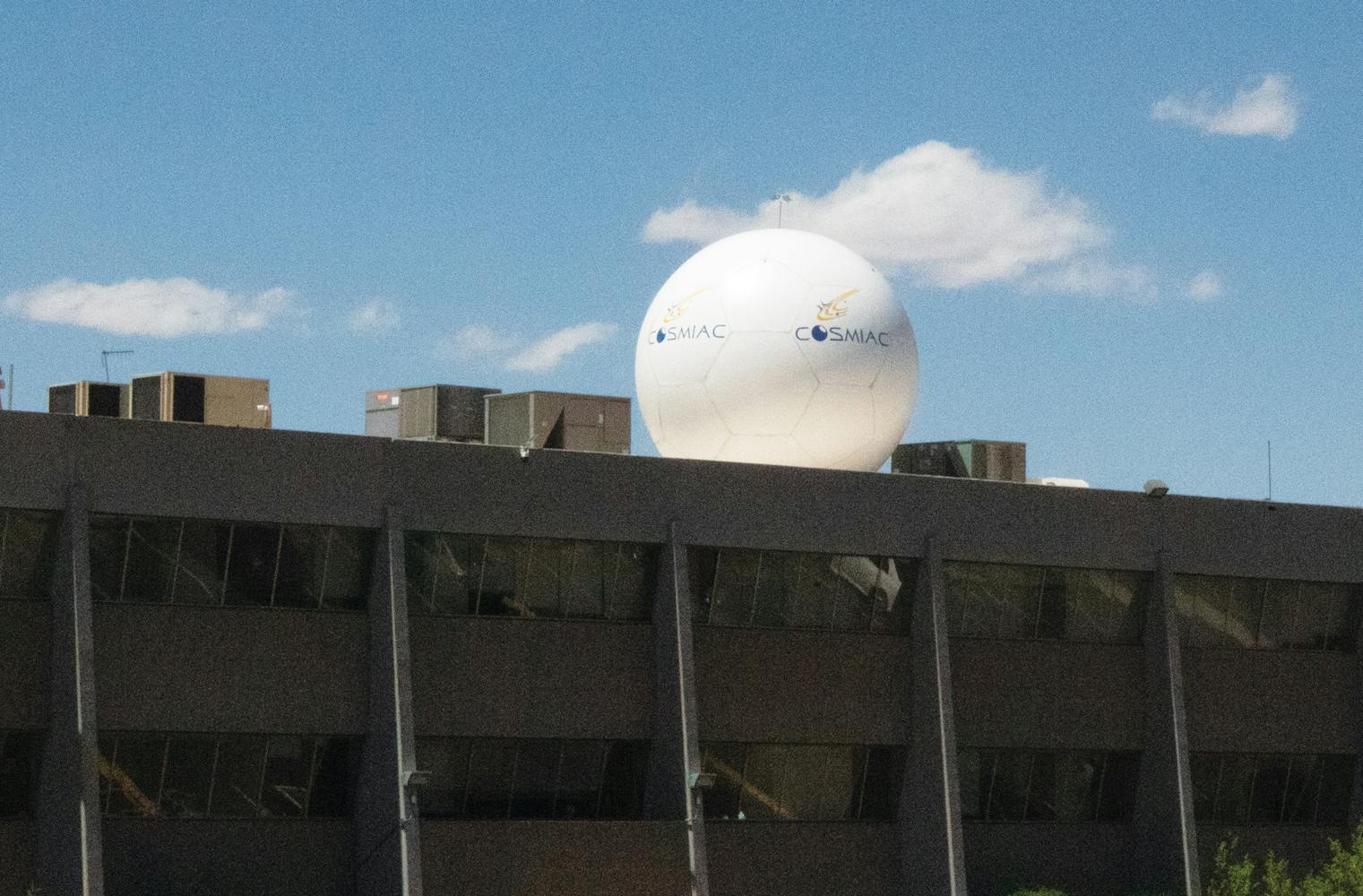
The University of New Mexico has its own aerospace research lab where Lobos touch the stars. Just a ten minute drive from Main Campus is the COSMIAC lab.
COSMIAC, or Configurable Space Microsystems, Innovations and Application Center, is a Tier-2 Research Center that focuses on space exploration. Daniel Garcia, a research engineer with UNM COSMIAC, said COSMIAC is special because of the people involved.
“Space is hard. Space is really hard. And the fact that we have a group, a cohort here at COSMIAC, that is almost singularly focused on trying to be a part of this really difficult challenge, is really special. And the kind of way we operate at the center here, it is evolving, and we’re trying to evolve with it. And in the midst of all of that, the thing that remains is these incredible people that are focused and interested and dedicated in the work,” Garcia said. “To come from this community, engaging in what is one of the rapidly growing industries, in this city and in the world, sort of centered here at this lab is really special.”
COSMIAC is a subsection of UNM’s School of Engineering, but receives its funding through contracts as opposed to University funds, Garcia said.
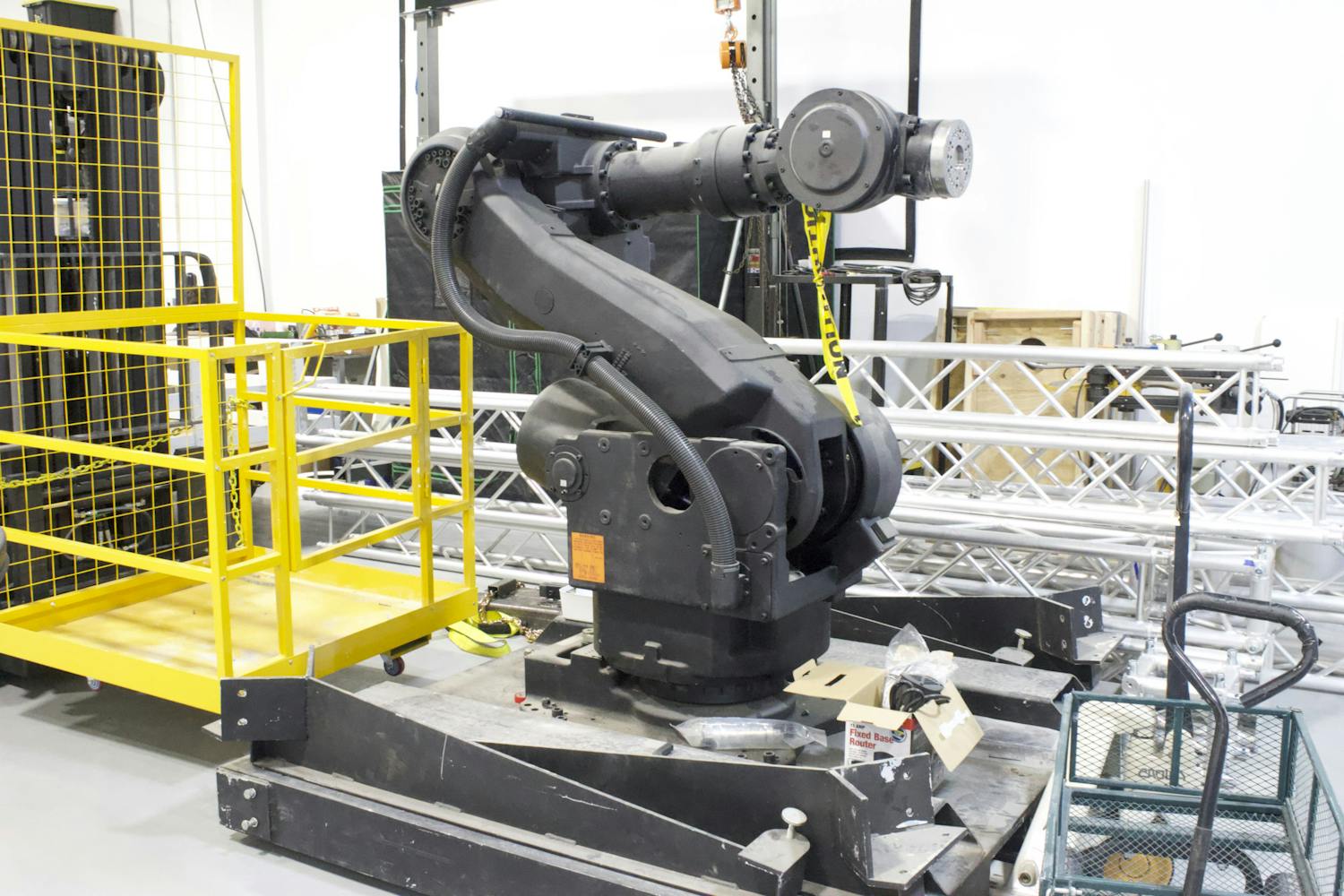
In both COSMIAC’s main office and in their nearby lab, members of the COSMIAC team can utilize state-of-the-art technology including automatic precision drill presses, 3D printers, laser etching and a thermal vacuum chamber for testing machines and parts in a vacuum and at temperatures between -58 degrees Fahrenheit (-50 degrees Celcius) and 356 degrees Fahrenheit (180 degrees Celcius), simulating the conditions of space.
Some of the equipment and techniques, including soldering, are taught to students by NASA representatives, Garcia said.
“We do have a couple of soldering stations on site, so every couple of years, we’ll have some representatives from NASA come down and they teach all of our students. They get certified on NASA electronics fabrication,” Garcia said. “They’ll actually get certifications to design and construct boards using the same procedures that they do down at the electronics center at NASA, Houston or Langley. We’ve got a great relationship with those guys.”
The most recent project COSMIAC worked on was NASA ELaNa, or Educational Launch of Nanosatellites.
In the wake of NASA’s successful Artemis II mission, Garcia said he’s excited to see a renewed interest in space research in the general community. Space missions have laid the groundwork for vital, everyday technologies such as cell phones and GPS, Garcia said. He said that space research and exploration has a distinct philosophical foundation of curiosity and unity.
“I’m so glad that more people are turning their ear towards (space research) because there’s so much cool science happening here,” he said. “I think a lot of detrimental comments that come towards space research, like, ‘Why are we investing money in space when there’s problems here on Earth?’ which is a very real concern. None of us here are blind to that, but space is for everyone, and the lessons we learn from pushing ourselves, again, sort of in that philosophical sense of like exploring what’s possible.”
NASA ELaNa aims to send small satellites to space for research missions. The satellites are often attached to bigger crafts already launching for different purposes.
“They get launched on these things called STPSats (Space Test Program Satellites), which are basically these science research missions. They get launched with the little ElaNa satellites, kind of on that bigger satellite, and deattached and then they do their operations,” Garcia said. “So we’ve actually built both sides of that. We’ve helped design the STP sets for a number of missions, like the actual spacecraft hardware, the chassis, solar panels, electronics. We’ve tested it for space, stuff like that. And we’ve also designed the smaller sort of subsatellites, deployable satellites that have really payload-specific goals and missions and stuff.”
Get content from The Daily Lobo delivered to your inbox
Garcia said space research is a reflection of an innate human curiosity.
“Our entire social structures that have been built over the millennia of humans are built around exploring this place that we are,” Garcia said. “We left the cave at one point, and we went over the hills and we crossed the oceans and we did that stuff. And the context in which all of that happened is obviously, in some cases, quite problematic, but the nature of exploration is undeniable. The desire to see what is on the other side of the hill; to illuminate the night; to go to the bottom of the Mariana Trench or the top of Mount Everest, seem like such arduous and meaningless tasks, but I think there is almost nothing better that embodies the human spirit than that desire for like, ‘Hey, what’s out there?’”
Addison Fulton is the culture editor for the Daily Lobo. She can be reached at culture@dailylobo.com or on X @dailylobo


