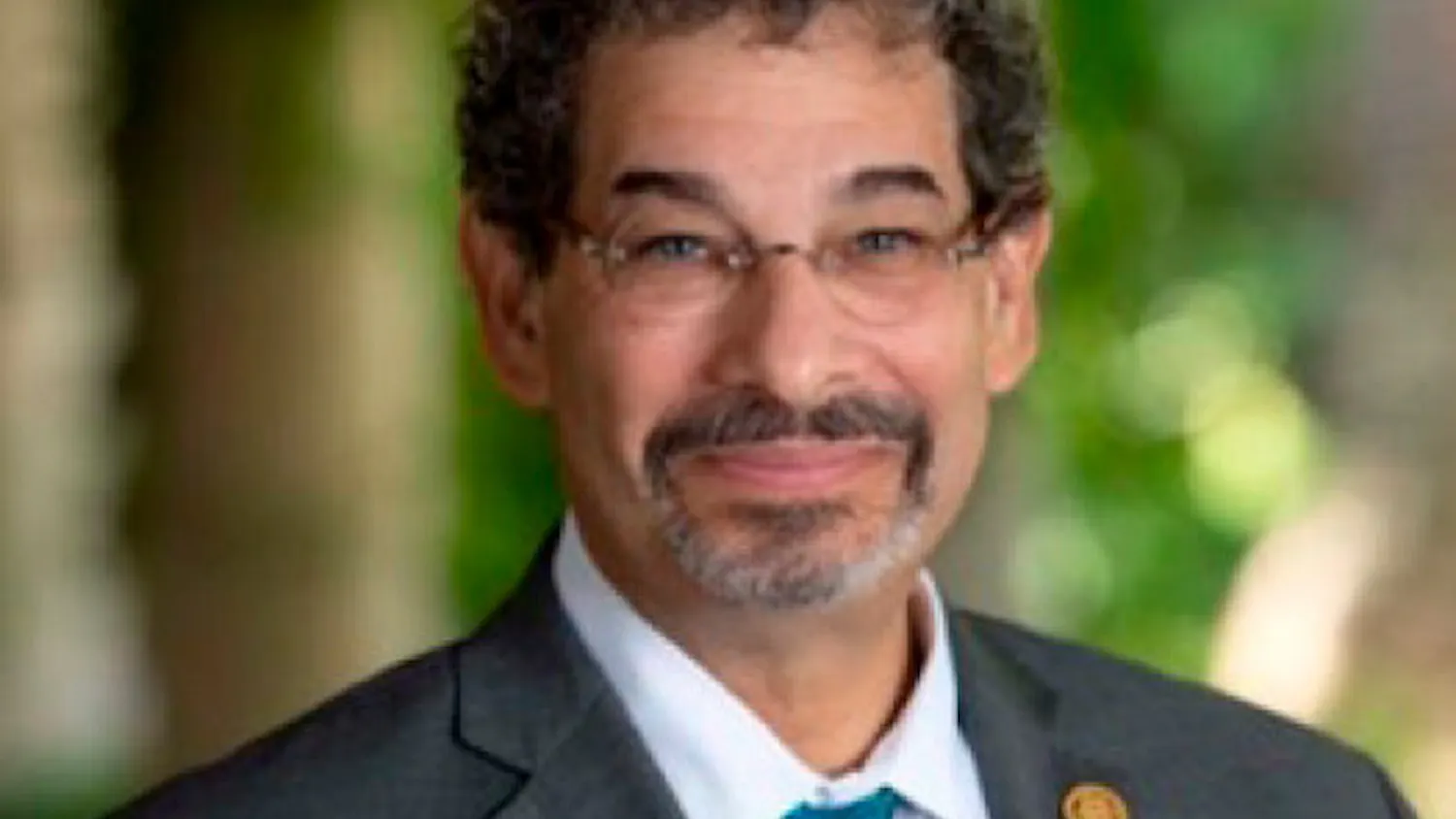
Martin Chávez is running for a third consecutive term as mayor of Albuquerque.
Look for interviews with Chávez’s opponents, Richard Berry and Richard Romero, later this week. The candidates were each asked about the University’s place in the city, water, sustainability, crime, and the immediate changes they would make upon taking office.
Daily Lobo: How do you picture the role of the University in the city of Albuquerque?
Martin Chávez: One, we’re working very closely on sustainability issues, very intensely in partnership. Two, we’re working on broadband issues so that the city and the University can be wired appropriately with fiber optic. And three, architecturally, we’re working very closely. Historically, UNM tended to put its backside to the rest of the community, and we’re working hard to make sure that it’s open architecturally as it fronts Central, University and Lomas. We’ve just recently formed the Community Research Collaborative between UNM, the city of Albuquerque and Sandia National Laboratories, which we’re loaning executives, initially, so that we can go out in search of grants. The idea is to use the grey matter that is abundant at UNM and at Sandia and apply it to real-world problems in a major city, like the city of Albuquerque. That’s the one that I think is going to, 10 or 15 years from now, be a model that others will replicate around the country…
DL: The University has historically turned its backside, architecturally, to the rest of the community?
MC: I’ll give you a perfect example. I worked really hard to save Yale Park, unsuccessfully. And the bookstore went there. Architecturally, the bookstore is not my image of great architecture. It was at my instigation that Rep. Chasey put the legislation in to provide funding for all UNM students to ride the bus. Now, we want to move it to the next step, to a modern rail format, so that we can connect the Railrunner up Central, down University, accommodate CNM, the Sportsplex, out César Chávez and out Yale to the Sunport. When it comes back, it comes straight down Yale to Central. That creates a circular of Yale, University, Central and César Chávez, which will allow UNM students to park at the stadium and just take the rail down to main campus.
DL: As university students, much of the global warming crisis will be placed on our shoulders for the next generation. What kind of tangible improvements can we expect to see in the area of sustainability by the end of your term?
MC: One, I would encourage you to spend a little bit of time at the sustainability site for the city of Albuquerque – our “Q” site – so you can see what we’ve done for the city of Albuquerque as a municipality. We’ve reduced the municipal organization’s carbon footprint by about 54 to 57 percent, which is substantially beyond what Kyoto called for. … Last year, Albuquerque was recognized by the EPA as the best city in America addressing climate change. The year before, we were recognized by the U.S. Council of Mayors in their inaugural award as the best city in America addressing climate change.
DL: What kind of vision do you have for public transportation, especially the Railrunner? And, also, where does the trolley fit into that?
MC: Well, that’s modern rail. Those who are against it call it the trolley system, and I’m the only candidate that supports a modern rail system for the city of Albuquerque.
DL: The last question I have is specifically for you about your fourth term. What motivated you to seek a fourth term, and has your vision changed throughout your experience as mayor?
MC: Well, I’m born and raised in Albuquerque. I love this city, and I’m not ashamed to say it. My vision has been exactly the same. It’s a city where kids can realize their dreams … We want to have opportunities here where if somebody wants to stay in their hometown, they can do that. That’s why the greening of the economy is so important, the film industry is critical. It’s not just what’s going on in front of the camera. That’s a small percentage. It’s what’s going on behind the camera. … It’s these new technology jobs that are environmentally pristine and create opportunity. The dream hasn’t changed one iota. I’ve gotten smarter about how to realize some things. You know, we’re in the middle of a recession. That’s one thing that does concern me about those who are running is that they’ve not been the mayor in good times and bad times. I have, and I know how to balance a budget properly so you don’t have to reduce services. I’m not afraid to make tough decisions… This is one of the only cities in America that didn’t lay people off and reduce services. We did it because we’re very tight with the dollar at City Hall, and we’ve done things to expand the private sector so that creates more revenue coming in… I’m running because my passion for the job and the city is undiminished. I’m just smarter than I was and more experienced.
The full transcript of this interview is available at See the full interview version
Get content from The Daily Lobo delivered to your inbox