

Throughout the University’s history, Black students have continued to fight for justice and equality at the University of New Mexico.
Here are some of the many instances during which these students fought for what they believed was right.
1969 protest against Brigham Young University
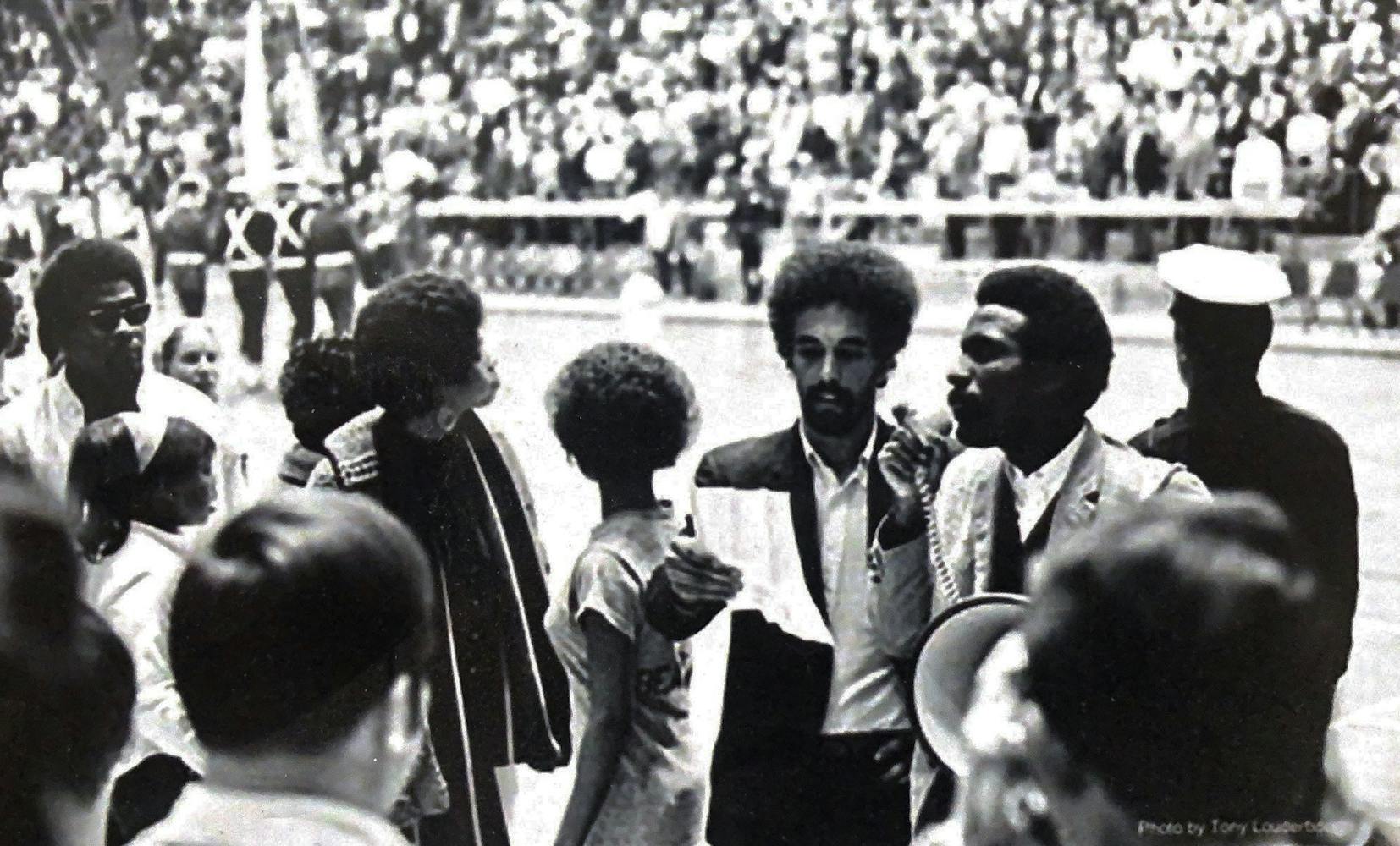
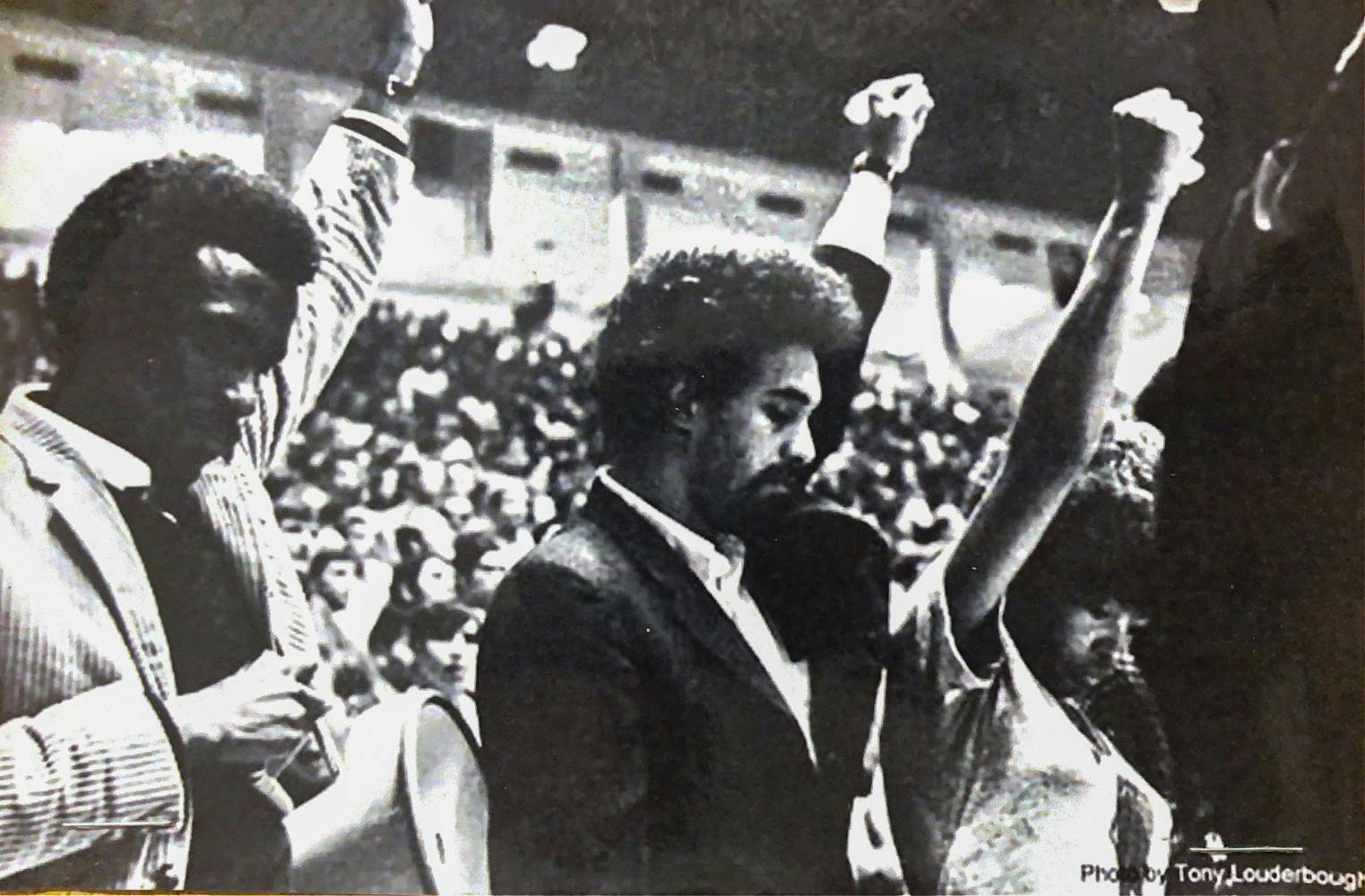
On Feb. 27, 1969, about 85 members of UNM’s Black Student Union and United Mexican American Students staged a walkout at a UNM-BYU basketball game to protest against Brigham Young University, whose racially discriminatory practices sparked protest across university athletic competitions against BYU, according to a 1969 Daily Lobo article.
BYU, which is operated by the Church of Jesus Christ of Latter-day Saints, widely known as the Mormon Church, barred Black people from priesthood within the church until 1978, according to an excerpt from “Raising the Standard of Truth: Exploring the History and Teachings of the Early Restoration,” published within the BYU Religious Studies Center.
According to the Daily Lobo article, the Black and Mexican American students made their way to the court sideline and lowered their heads while raising their left fists during the national anthem. When the announcer directed them to leave the court, they refused to do so until player introductions concluded.
The four Black players on the basketball team wore black fabric on their jerseys throughout the game, according to the article.
In 1970, the UNM BSU called on anyone who was concerned about BYU’s racism to wear black armbands during a football game, according to a 1970 Daily Lobo article.
“The Civil Rights Movement was going on,” Brandi Stone, director of African American Student Services, told the Daily Lobo. “Students were learning in the streets how to be civilly disobedient, how to disrupt, how to challenge systems, how to ensure that we have more equitable communities that Dr. Martin Luther King had advocated for.”
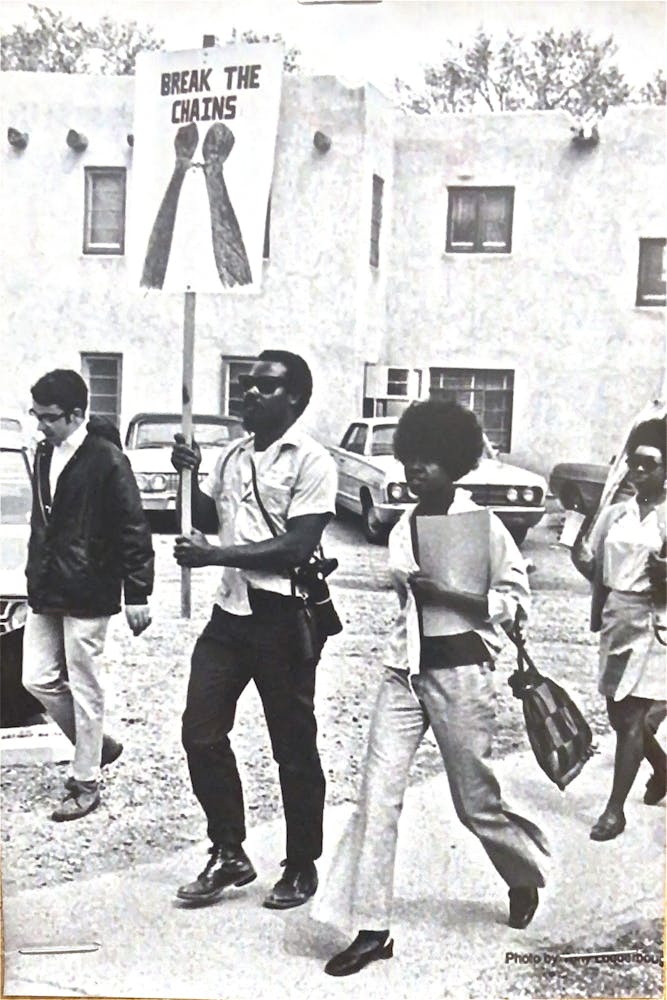
1969 BSU protests
In April 1969, hundreds of students gathered to support Black Student Union members as they made demands to then-UNM President Ferrel Heady, according to a 1969 Daily Lobo article.
Founding Black Student Union President Joe Long, joined by other BSU members, presented Heady with a list of demands. They pushed UNM to investigate discriminatory racial practices at the UNM athletic department, create a Black Studies department, hire more Black teachers and sever all ties between UNM and BYU, according to the article.
Get content from The Daily Lobo delivered to your inbox
Heady told the students he would be "glad to see" a Black Studies department if BSU initiated a “justifiable” proposal, according to the article.
The first director of the Black Studies program, Charles Becknell Sr., began directing the program in 1970. The program is now known as the Africana Studies program.
“The students demanded that the UNM president establish a Black Studies program, and through student pressure, they agreed,” Becknell told the Daily Lobo.
1970 Kent State University protests
In May 1970, students went on strike after four Kent State University students were killed by the Ohio National Guard while protesting the Vietnam War, according to a Daily Lobo article.
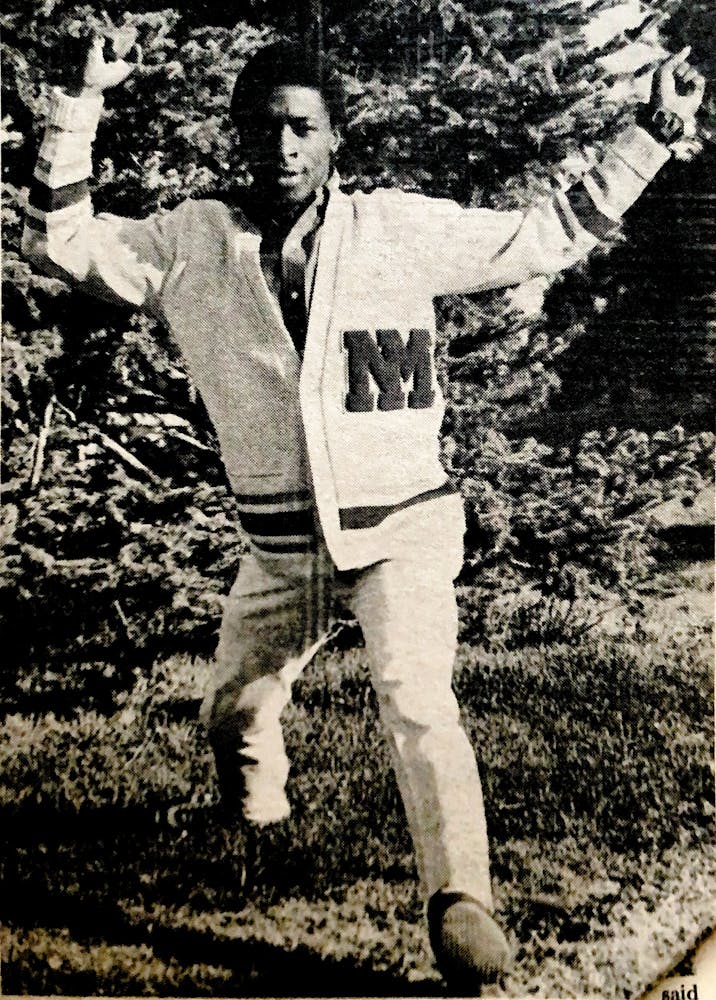
A violent brawl ensued between students regarding lowering the United States flag. Senators from the Associated Students at the University of New Mexico ultimately lowered it. Among the senators was Sam Johnson, the first Black ASUNM president pro tempore.
Johnson attended the Pan-African flag raising ceremony earlier this month.
“The National Guard came on our campus,” Johnson said at the ceremony. “I still have scars on my arms where they stabbed me. I was taken to the hospital, and of course we were the ones that were arrested.”
Five Black students, including Johnson, were arrested and charged with aggravated battery during the flagpole incident. At a press conference held by the BSU, several Black community members, including Becknell, denounced the arrests as discriminatory and unjustified, according to a 1970 Daily Lobo article.
"I've always known that there was discrimination in Albuquerque, this only serves to prove my point,” Becknell said in the article. “When white society needs a scapegoat, our people always suffer.”
2020 Black Lives Matter protests
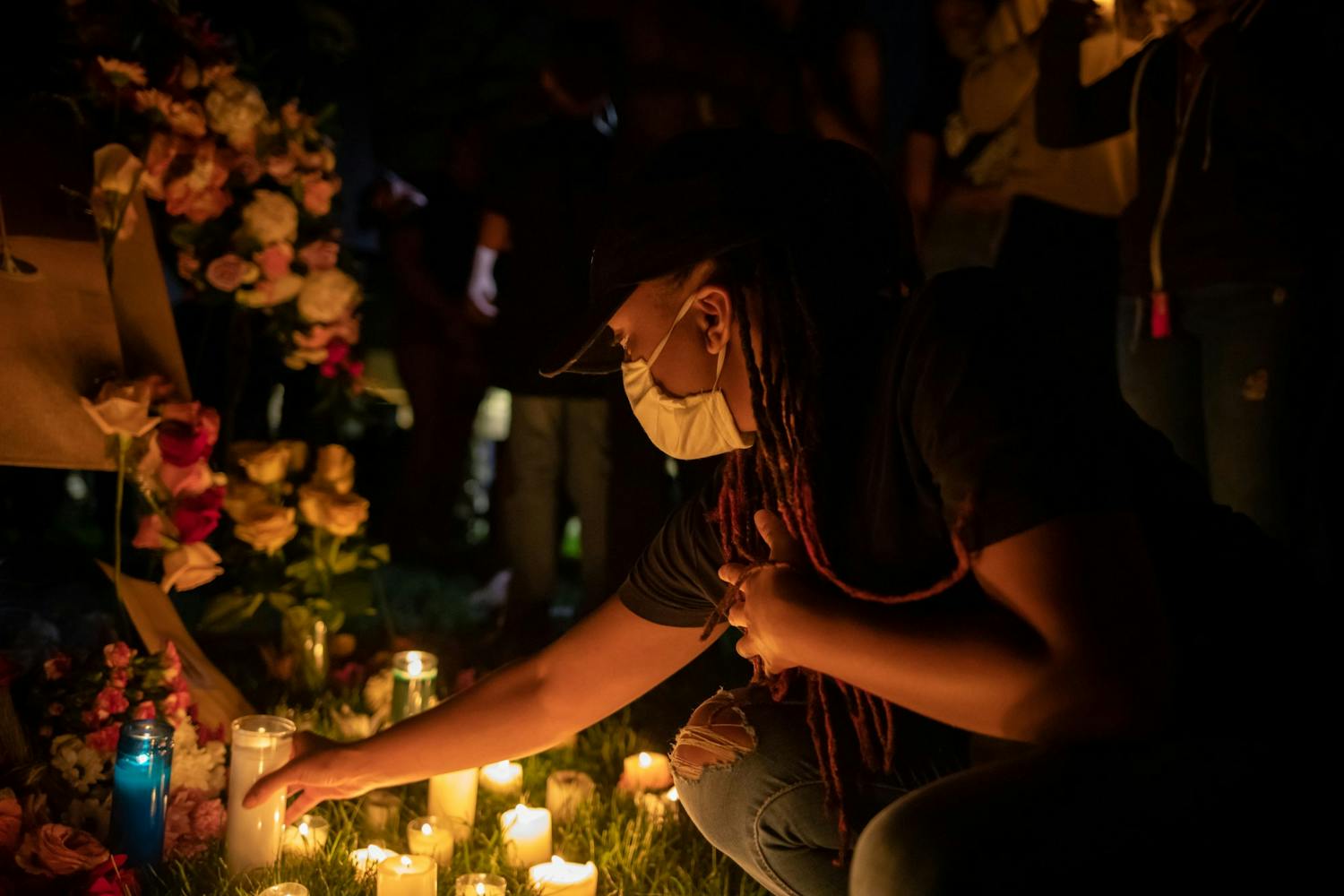
In summer 2020, protests erupted across the country, reaching the UNM campus, after George Floyd — an unarmed Black man — was murdered in Minneapolis by then-police officer Derek Chauvin when he knelt on Floyd’s neck for eight minutes while he was handcuffed.
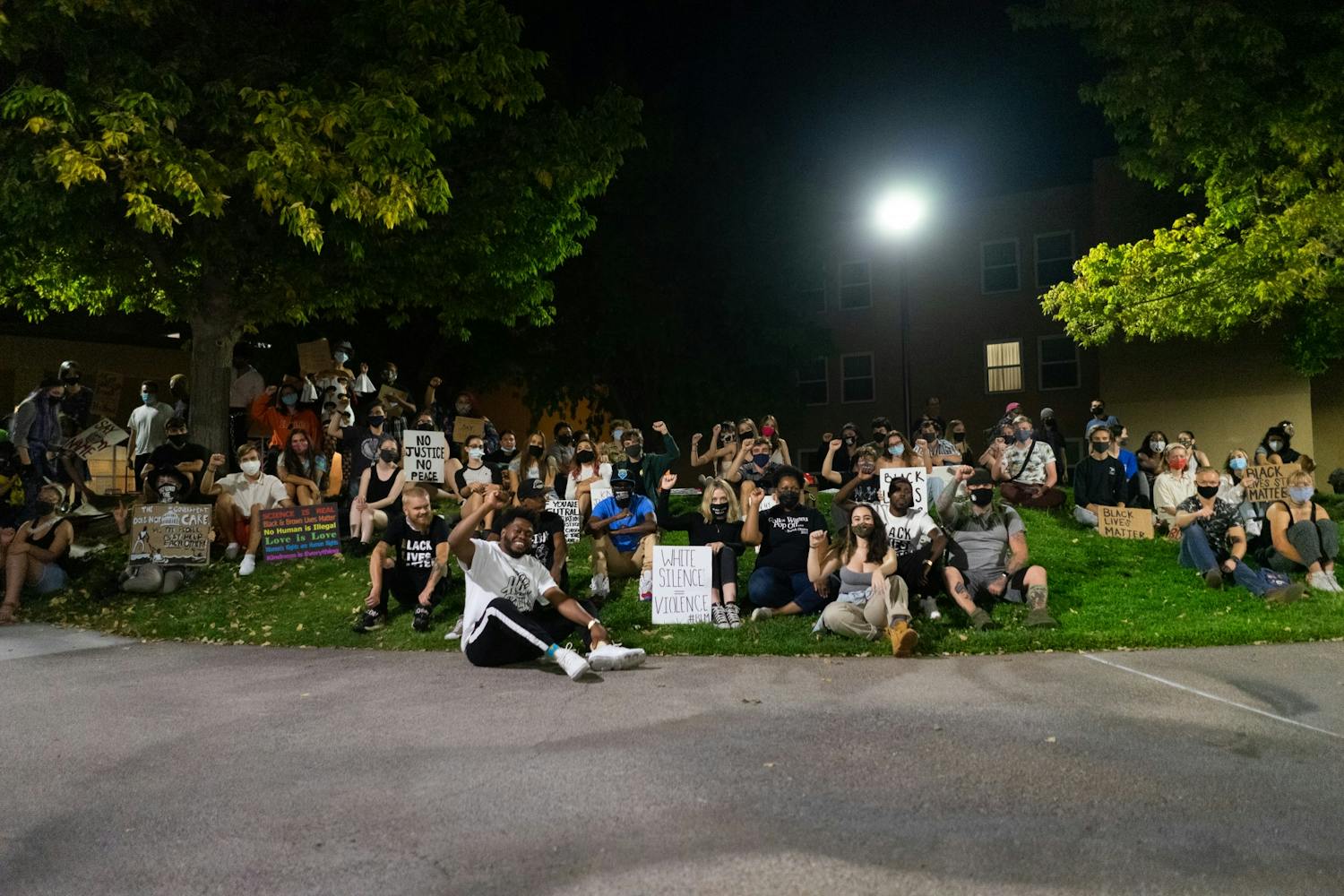
In June 2020, Black Lives Matter demonstrations took place on campus. Peaceful protesters were met with a heavy police presence, most notably when two armed New Mexico State Police officers were stationed on the roof of George Pearl Hall.
In September 2020, students organized nightly outdoor conversations about racism and systemic inequality in front of La Posada Dining Hall.
Brandi Stone said the 2020 protests were different from previous campus protests because of the COVID-19 pandemic.
“Students were working through the incident from their respective regions of the country, so their experiences were informed by regional politics and by a collective virtual type of activism and protesting, in addition to those who were able to be out in the streets,” she said.
Leila Chapa is the social media editor for the Daily Lobo. She can be reached at socialmedia@dailylobo.com or on X @lchapa06
Paloma Chapa is the multimedia editor for the Daily Lobo. She can be reached at multimedia@dailylobo.com or on X @paloma_chapa88
Leila Chapa is the photo editor for the Daily Lobo. She can be reached at socialmedia@dailylobo.com or on X @lchapa06
Paloma Chapa is the news and multimedia editor for the Daily Lobo. She can be reached at multimedia@dailylobo.com or on Twitter @paloma_chapa88


