

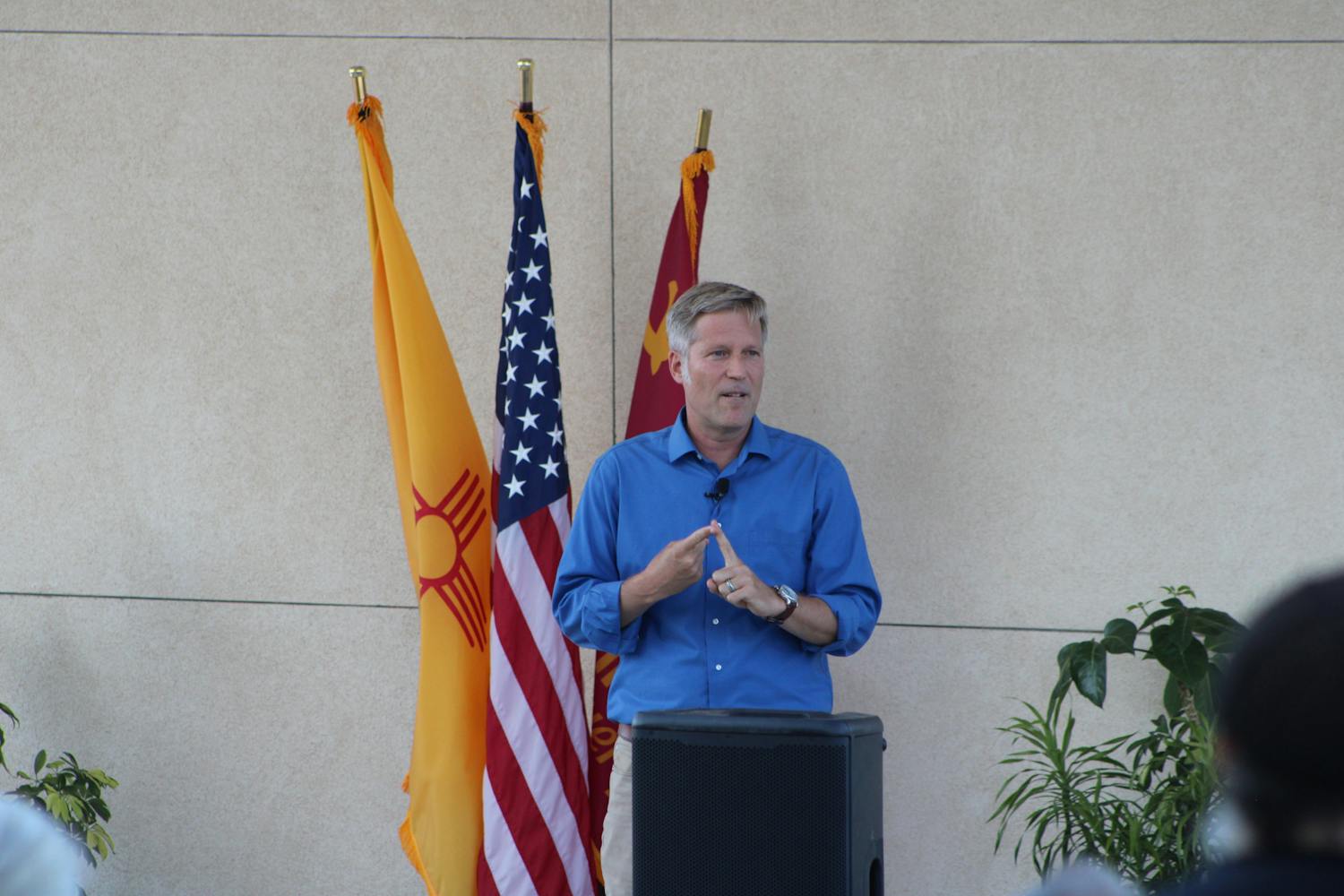
Mayor of Albuquerque Tim Keller sought to foster a new “abundance agenda” during his ninth State of the City address on Saturday, highlighted by multiple policy announcements he said were meant to grow the city government’s role in “reducing the pain of everyday life” for Albuquerque residents.
Among the new policies was a new “say yes first” approach to certain types of permitting requests, offering up unused city properties and lengthening the operating hours of others. Keller also announced a “backyard exchange” stocked by homegrown goods and produce volunteered by city residents and an expansion of mental health and drug treatment programs.
“It’s about a city abundance agenda that is about sharing what we have instead of protecting and hoarding it. It is about making your life a little bit easier each day and it’s about trying to reduce all those things that are causing friction that make your life difficult here in the city of Albuquerque,” Keller said. “And if we can do that, we can restore some hope. We can restore a baseline of inspiration that actually says that in Albuquerque, New Mexico, this is a better place to live than anywhere else. Not just because of our amazing culture, but also because the government is helpful.”
The address was interrupted four times by individuals in the crowd, almost all of whom criticized Keller and the Albuquerque Police Department’s treatment of people without housing.
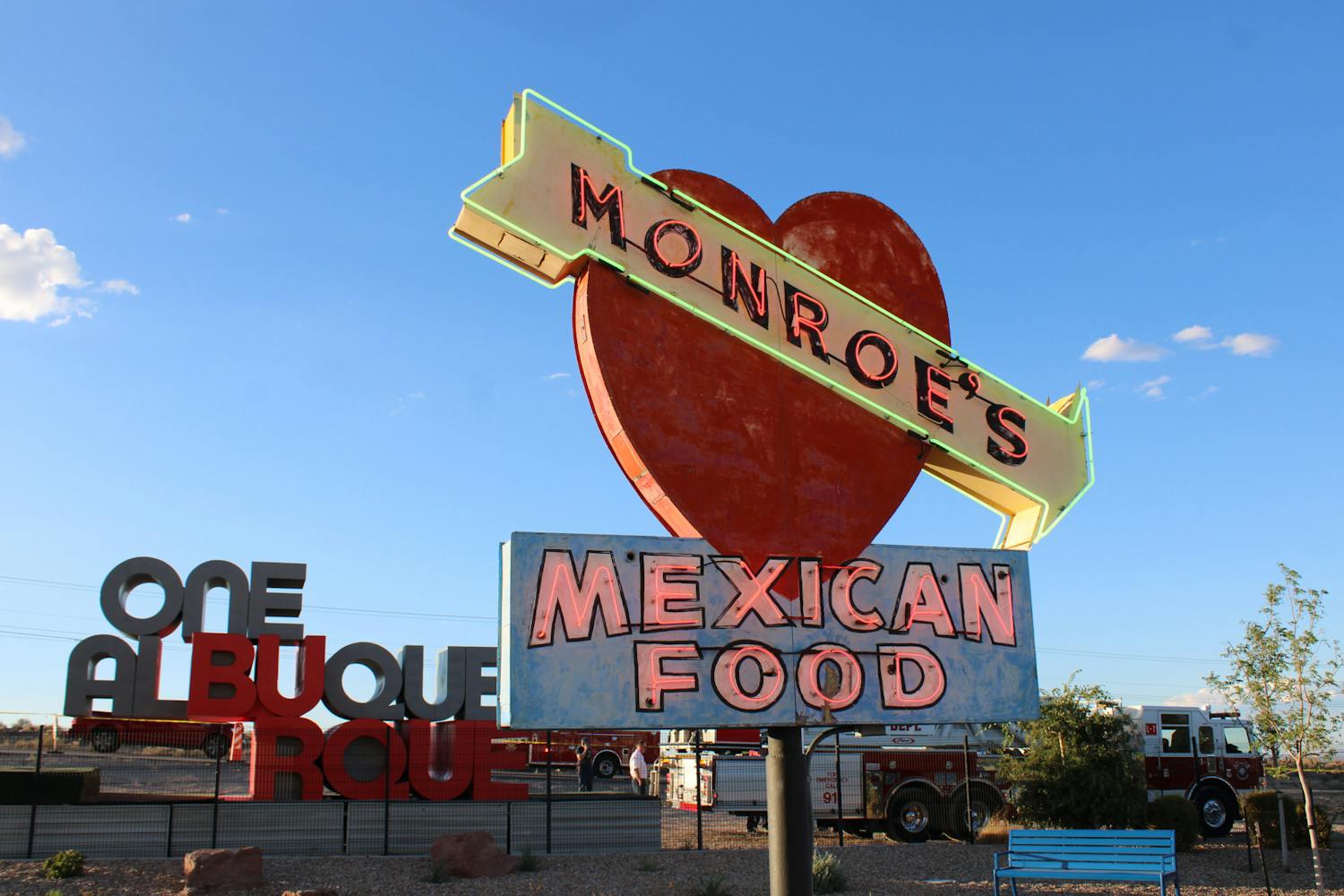
The event, held at the Route 66 Visitor Center, began with attendees exploring the space, including exhibitions from various city agencies and organizations and an art installation. Pre-recorded messages from city council members were played to begin the address portion of the event, highlighting new developments and focuses in each councilor’s district, before brief remarks by First Lady Elizabeth J. Kistin Keller. After being introduced by the first lady, the “heavy metal mayor” was played onto (and later off) the outdoor stage by heavy metal music, which has become a symbol of the leader throughout his now three-term tenure.
Attendees were also shown pre-recorded confessionals from three different residents to highlight the city’s progress in fostering different kinds of community spaces like gardens and parks, and in offering resources to those in need, specifically through the Albuquerque Community Safety department.
ACS was mentioned throughout the latter half of the address, and was touted by the mayor as the example for Mayor of New York City Zohran Mamdani’s campaign pledge to establish a similar agency, which was eventually established as the NYC Office of Community Safety. Keller also announced that leaders from Seattle and Chicago had recently visited Albuquerque in order to study the program and use similar approaches in their cities.
Keller again addressed allegations made by a former Drug Enforcement Agency agent and published by the Associated Press that the agency had allowed tens of thousands of fentanyl pills to be trafficked into New Mexico in the name of tracing the drugs’ path to make more major arrests from 2023 to 2025, calling the actions “wrong” and “immoral”.
“We are at least going to honor the cost of those lives that were lost, the cost of everyone who’s working in recovery and in rehab and dealing with this issue, the cost of law enforcement to deal with this issue, and we are going to hold those accountable who made that decision,” Keller said. “We are going to make sure that Albuquerque is never used again by our federal government for a drug experiment.”
Staying on the subject of federal government, the mayor pledged to “stand up to (Immigrations and Customs Enforcement)” following the deaths of Renée Good and Alex Pretti in Minneapolis, Minnesota, saying “we have the laws and the grit and the guts to make sure that that does not happen in Albuquerque.”
The University of New Mexico was also mentioned briefly during the address, namely the imminent construction of a new School of Medicine on Lomas Boulevard and the recent hiring of Dr. Steve Goldstein as University president. Keller told the Daily Lobo after the event that he’d spoken to Goldstein over the phone multiple times since the latter’s appointment and was working on getting an in-person meeting scheduled.
“He seems actually really innovative and open to all sorts of ideas, and so we’re going to look at how we can help with on the hospital side behavioral health treatment, and we talked with Dr. Richards about that. It’s a big one. We’re also going to try and see what we could do downtown, and also of course the housing around the stadiums is sort of next up,” Keller said, referring to Michael Richards, the Executive Vice President of the UNM Health Sciences Center and Chief Executive Officer of the UNM Health System.
Get content from The Daily Lobo delivered to your inbox
Elliott Wood is the editor-in-chief of the Daily Lobo. He can be reached at editorinchief@dailylobo.com or on X @DailyLobo


