

If you have been nervous about the food you’re eating lately, you are not alone.
Eggs, blueberries, jalapenos and alfalfa sprouts are among the growing list of foods that have made national headlines recently for being recalled for salmonella, E. coli and other forms of contamination, as the cyclospora outbreak in lettuce continues to chart its own path.
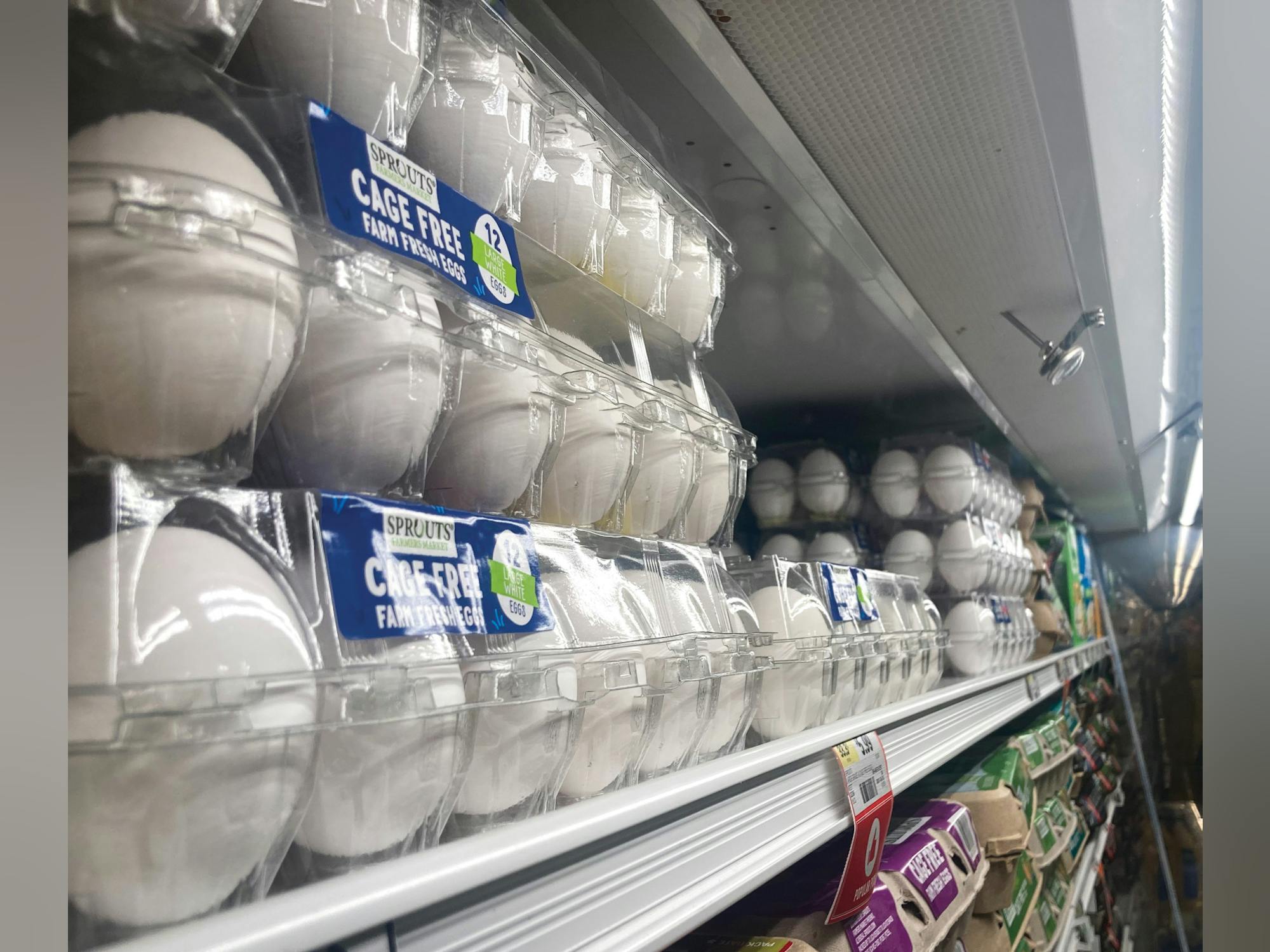
Last week, eggs were updated to the Class I contamination level by the Food & Drug Administration, which warns of a “reasonable probability that the use of or exposure to a violative product will cause serious adverse health consequences or death.” The update was issued to six distribution states, including New Mexico.
In a statement to the Daily Lobo, New Mexico Department of Health Public Information Officer David Morgan wrote that the state has had three cases linked to the salmonella egg outbreak from eggs distributed in New Mexico through Brookshire grocery stores.
Popular food brands targeted for salmonella recalls in jalapeños include prepared foods at grocery stores Whole Foods Market and Trader Joe’s, and restaurant chains Chipotle and Qdoba. The contaminated jalapenos were not distributed in New Mexico grocery stores, but the supplier distributed to Chipotle, according to Morgan.
“NMDOH has four Salmonella javiana cases linked to (the jalapeno) outbreak,” Morgan wrote. However, he added that Chipotle pulled their jalapenos on July 20, and there is “no longer an ongoing risk to New Mexicans from jalapenos.”
Some frozen blueberries were recalled under a Class I update and voluntarily recalled 1.6 million dozen white shell eggs and brown shell cage free eggs that were produced in Texas and distributed to New Mexico.
Other recalled egg brands include Kroger, Simple Truth and Country Morning, according to the
FDA, and New Mexico is among states affected by these recalls.
Morgan wrote that “any purchased products associated with any of the above recalls should either be thrown away or returned to the store for a full refund,” and the best way to prevent foodborne illness is paying attention to FDA recalls, frequent hand washing and proper food preparation.
UNM undergraduates Riley O’Connor and Yessenia Lopez told the Daily Lobo they had not heard about the outbreaks, and generally have not been worried about contamination.
“I’m not necessarily a germaphobe when it comes to my food but I’m kind of in the in-between, I just won’t eat it if it doesn’t look good to me,” O’Connor said. “I think that (La Posada Dining Hall) is pretty decent for any cafeteria food to be because obviously there’s always going to be people touching it, but I think it’s as good as it’s going to get.”
Get content from The Daily Lobo delivered to your inbox
UNM freshman Ellyana Solosky said the recent food outbreaks have impacted what she chooses to eat.
“I feel like I’ve been avoiding fresh vegetables and fruits way more just because especially with the parasite, like, salad was banned in our house,” Solosky said.
Solosky said she primarily dines at La Posada, and has gradually been warming her way back to eating salad at the salad bar, but was not up to date on the recent salmonella or E. Coli recalls.
“I feel better about it, but if it was right after the whole (cyclospora) parasite one, I would not have touched any of the fresh vegetables at all,” Solosky said.
UNM sophomore Sebastian Stoker said he will now be reducing his egg consumption after learning about the egg recall during his interview with the Daily Lobo.
“Make sure (the eggs) are cooked all the way. I guess no more over easy,” Stoker said of his plans.
Stoker said that since the start of the cyclospora outbreak, he has been cooking most of his vegetables.
“My dad would make food with all the vegetables cooked in it for the past couple months or so, whenever this started, and I’ve been sticking to that and not eating much fresh vegetables or fruits,” Stoker said.
Experts say that locally-grown produce may be a safer option amidst the foodborne outbreaks, according to USA Today.
Patricia Pantano is an educator at Camino de Paz Montessori Secondary School and Farm, located in Santa Cruz, NM, which sells dairy products and produce at the Albuquerque Downtown Growers Market, Rail Yards Market and Santa Fe Farmers Market.
Pantano said she thinks nationwide food contamination stems from the fact that most of what is sold in big grocery stores — even stores that push health and wellness more than others, like Whole Foods Market — is not only factory-farmed, but also packaged and cleaned in those large facilities.
“The producers are so large, and they cover such a wide distribution area that it’s really hard to pinpoint where an infection might be starting or even why, for that matter,” Pantano said.
The people who grow locally-produced foods are closer and more “in touch” with their product, Pantano believes.
“They know what’s been put on it, they know how it’s been harvested, they know how it’s been cleaned,” Pantino said. “And it’s typically done by the work of human hands and human observation, as opposed to large agribusiness, where so much of it is done mechanically.”
Camino de Paz Farm makes goat cheese in small batches and harvests milk from both cows and goats, and is able to notice when something has gone wrong with their product, according to Pantano.
“Rather than having 500 gallons (of milk) or something, you’ve got a small enough quantity that you can just say, okay, we’re going to toss this and then we’re going to look for the problem and then solve it,” she said.
Pantano acknowledged the financial constraint of buying local since local foods tend to cost more than mass-produced food.
“This is one of my biggest concerns is that not everybody can afford to buy local stuff because local farms aren’t subsidized like big ag is,” Pantano said.
Pantano said the lettuce grown at Camino de Paz is safe from cyclospora and encouraged people to still shop local and also grow their own food when possible.
“Like if I don’t grow sprouts, I buy them from a woman at the Santa Fe Farmer’s Market named Susan who’s been doing it for a bazillion years. And so there again, she’s like on the ground with it, right? She knows exactly what’s growing where and how it’s been watered and how it’s been harvested,” Pantano said.
Leila Chapa is the photo editor for the Daily Lobo. She can be reached at socialmedia@dailylobo.com or on X @lchapa06
Paloma Chapa is the news and multimedia editor for the Daily Lobo. She can be reached at news@dailylobo.com or on X @paloma_chapa88
Leila Chapa is the photo editor for the Daily Lobo. She can be reached at socialmedia@dailylobo.com or on X @lchapa06
Paloma Chapa is the news and multimedia editor for the Daily Lobo. She can be reached at multimedia@dailylobo.com or on Twitter @paloma_chapa88


